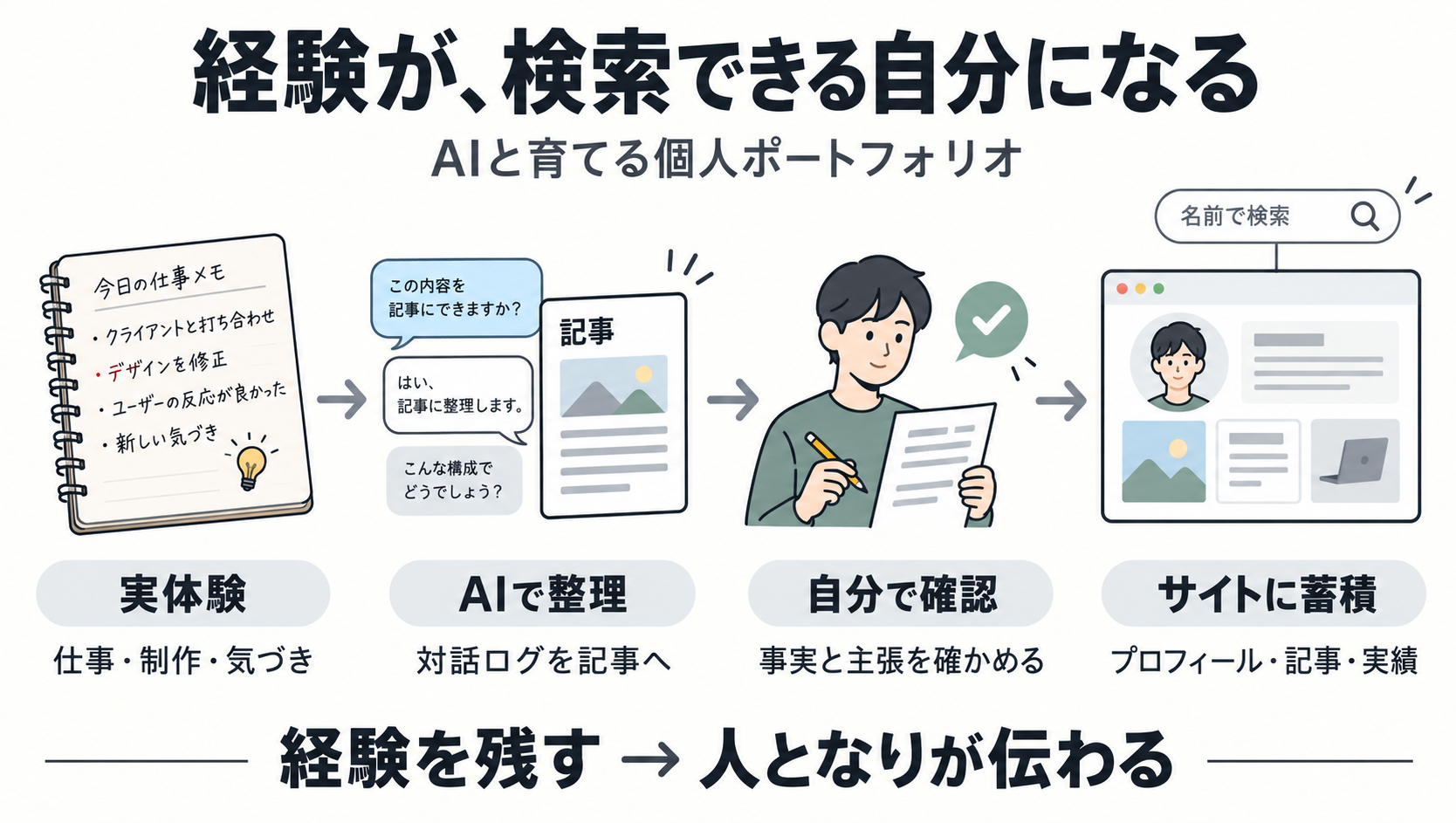
Around May 2026, I started building a personal portfolio site called “Personal Notes” to bring together my experience, projects, and ideas. When it first went live, it barely appeared in searches for my name. After three to four months of adding articles and improving the site, my profile page was at the top of the results in September.
I did not have my own portfolio site, but there were a few pages where people could learn about me, including my profile at the Web Analytics Consultant Association, LinkedIn, and Facebook. Those pages focused mainly on my career and certifications; they did not show what I think about or try in my day-to-day work. I wanted a place to record not only my work and personal projects, but also what went wrong and how I improved them. That is what led me to build the site.
It was not easy to be found by name. A well-known broadcaster shares my name, so Wikipedia and major media articles had long appeared in the results. Even so, I focused on recording my own experience rather than chasing rankings, gradually improving my profile and portfolio pages as I wrote.
After continuing to update the site, I searched for my name again in September 2026. The Personal Notes profile page appeared first. The results also showed my profile at the Web Analytics Consultant Association, LinkedIn, Facebook, and a portfolio page on the site. A few months earlier, searching my name had not led people to my site at all.
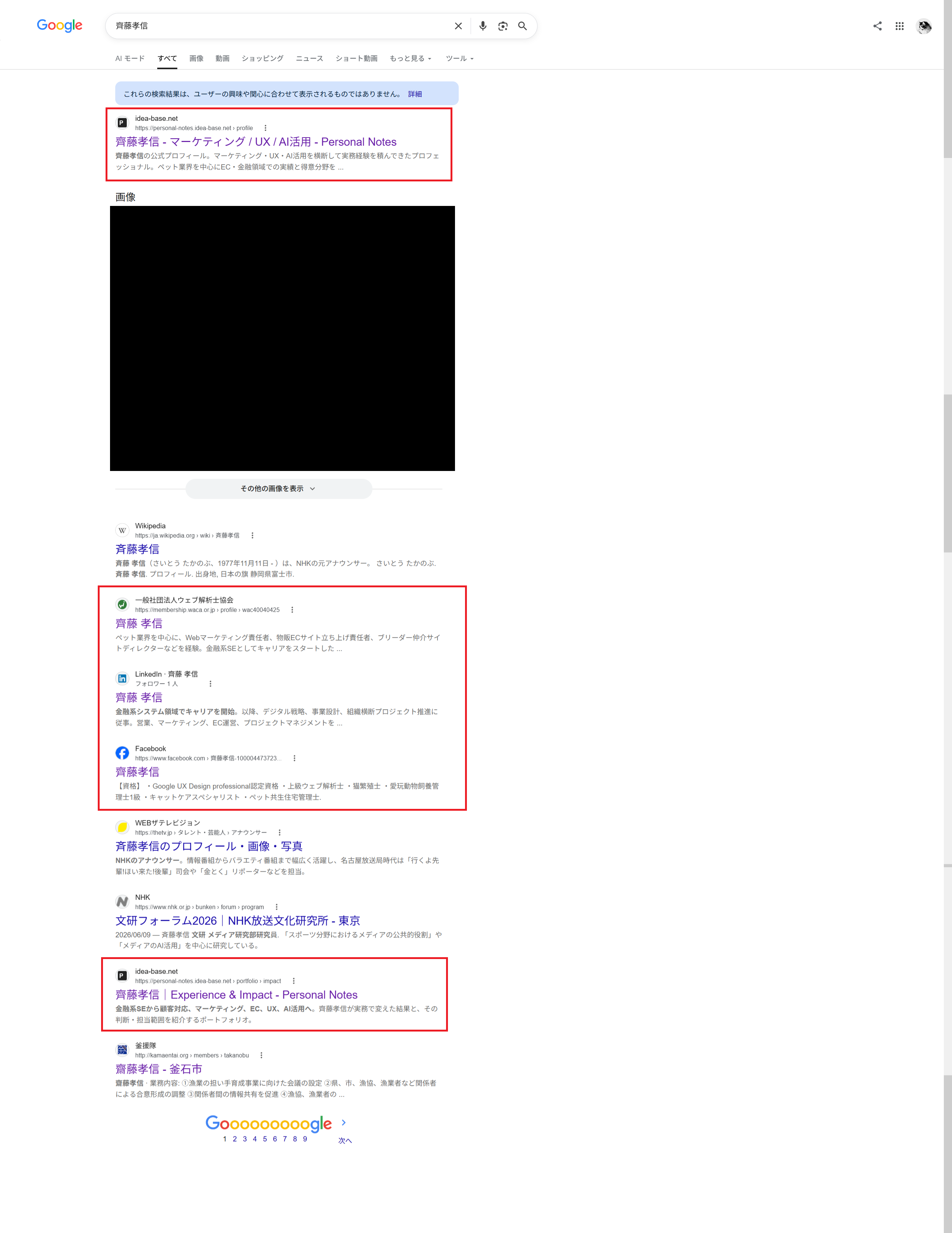
“Ranked first” refers to the search results I saw in September 2026. The page indicated that the results were not customized based on my interests, but rankings can vary by location, device, and other conditions. This does not mean that everyone will see the same result.
My Everyday ChatGPT Conversations Became Article Material

I had not been writing daily SEO articles to raise my rankings. The material for my articles came from everyday conversations with ChatGPT. I regularly talk through ideas about using AI, improving work, UX, marketing, e-commerce, Codex, and personal projects. I ask for help not only when things go well, but also when I get stuck or the result is not what I expected: “Why did this happen?” and “What should I do next?”
A conversation that helps me organize my thoughts in the moment can reveal, when I revisit it later, what I was struggling with, what I tried first, and where my thinking changed. The decision-making process remains in my own words, even when it is not visible in the finished result. By following the logs, I can recover doubts and assumptions that I might leave out if I tried to remember everything from scratch after the outcome was known. That made the conversations useful source material for writing about my experience.
Now I export my ChatGPT logs periodically and ask AI to identify conversations that could become articles. I review the suggestions to see whether they overlap with past articles and whether I can write about them concretely from my own experience. I choose the topics I want to keep, then ask AI to help outline and draft them.
I always reread the draft myself. AI may mix up events from my job with personal projects, or overgeneralize from a single experience. I check that the writing matches what actually happened, and correct any drift in its assumptions or argument before publishing.AI helps organize my experience into writing that other people can read. is closer to the truth: AI helps me with parts of the process.
For Publication, My Role Is to Review the Content
To keep publishing, I also had to account for the work that comes after writing. Even when the article text is finished, I still need to create the page, place images, set links, tune the title and description, and add it to the article list. Repeating all of that manually for every article would make updates a chore, so I started delegating this part to Codex.
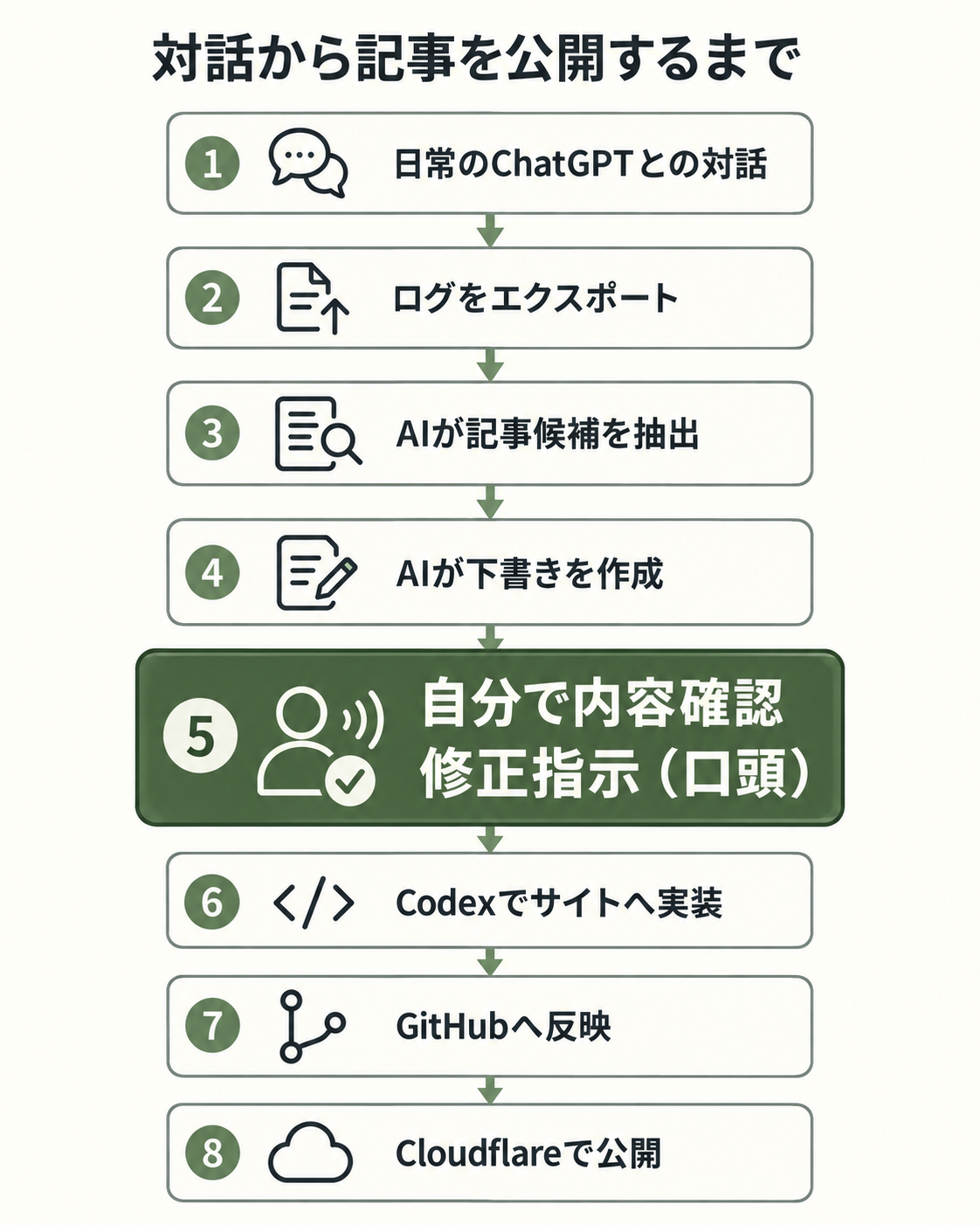
The site has basic rules for article templates, URL structure, design, and navigation. I delegate implementation, updates to GitHub, and publishing through Cloudflare to Codex. I review the result and give verbal instructions for anything I want changed. If I have a concern about the writing, images, or layout, I describe it and have Codex make the correction.
The diagram above shows the process from everyday conversations to publishing an article.
With a workflow from gathering material through publication, I do not have to come up with a topic from scratch or explain how to build a page every time I write. I keep the review step for myself and let AI help with the work around it. That has helped me continue updating the site.
I Improved the Whole Site, Not Just the Articles
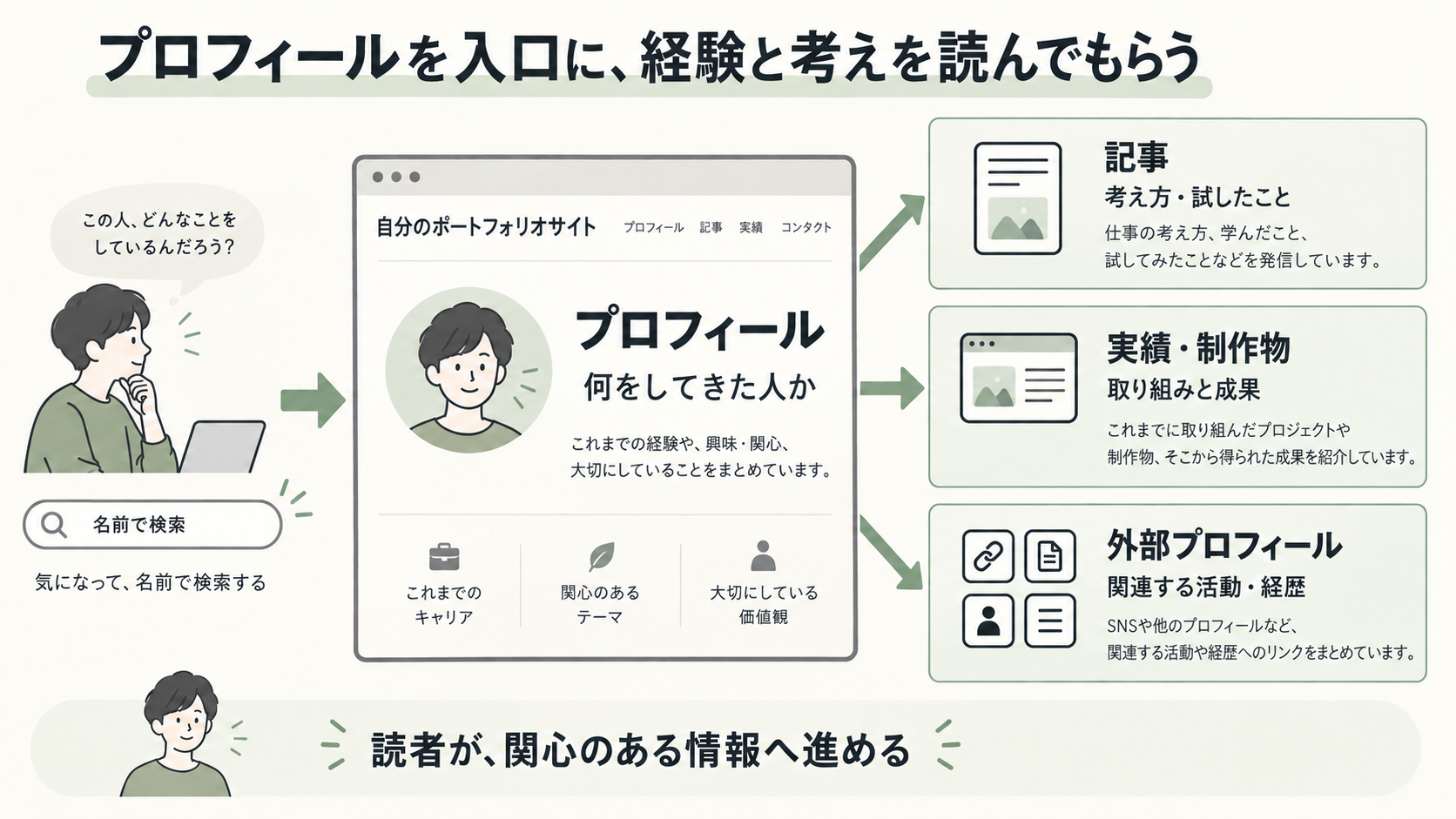
Personal Notes includes not only articles but also a profile, case studies, and projects. People who learn about my background and areas of expertise on the profile can continue to specific articles or work examples. Readers who arrive through an article can check who wrote it, and there is a page for anyone who wants to see completed projects.
It is easier for people to follow their interests when information has distinct roles and is connected, rather than crammed into one page. I use articles to share ideas that a résumé cannot fully explain, and portfolio pages to show the outcomes of my work. I have shaped the site so readers can move to relevant information no matter where they start.
I also link to external profiles I already had, such as the Web Analytics Consultant Association, LinkedIn, and Facebook, where useful. Each has its own role, so I do not need to copy everything onto my site. In the search results I saw, Personal Notes appeared alongside several external profiles—pages where people could learn more about me.
As the number of articles grows, inconsistencies with older pages can appear. About once a month, I use AI to review the site’s titles, descriptions, internal links, page structure, and broken links, and to suggest places that may need attention. I check each suggestion myself and apply only the changes I consider necessary.
I have shaped the site gradually while adding articles, fixing issues as I notice them and returning to older pages during monthly reviews. These past few months have been a combination of producing new articles and improving the site as a whole.
Organizing My Information with AI Helped My Site Rank for My Name
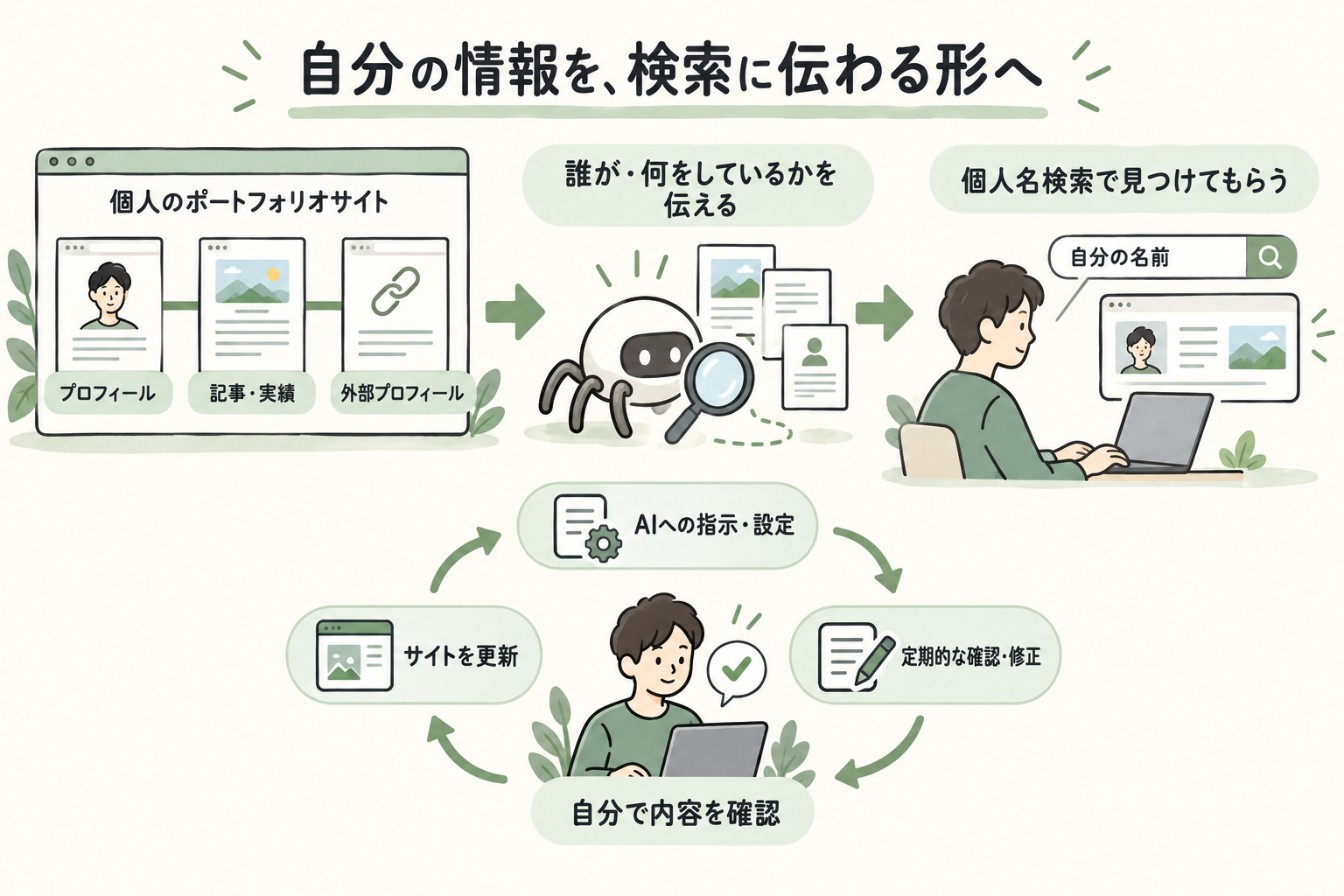
My experience gave me confidence that organizing my profile and activities with AI, and presenting them clearly to Google Search, can help a site rank for a person’s name within a few months. I built a site I did not have in May and updated it with articles and examples of my work for three to four months. In September, the profile page appeared first. I felt that clearly documenting who I am and what I do online can help people find me by name.
On my site, I have documented my background, ongoing work, and things I have built through articles and case studies, and made them accessible from my profile. With AI, I have also worked on page titles and descriptions, internal links, and connections to external profiles. My aim is to make my information easier to understand for both readers and Google’s crawlers. This experience showed me that AI can help not only write content but also shape a site so its information is clear to search.
With more development, I think much of the work to improve search rankings could be automated. I can define what AI should check and which rules it should use, then automate updates as articles are added and run regular checks on links and page structure. I would review the results, request any necessary changes, and Let AI handle maintenance that keeps the site clear to search.I believe that refining this system could help an individual keep working toward better search rankings over time.
AI Has Lowered the Barrier to Sharing My Work
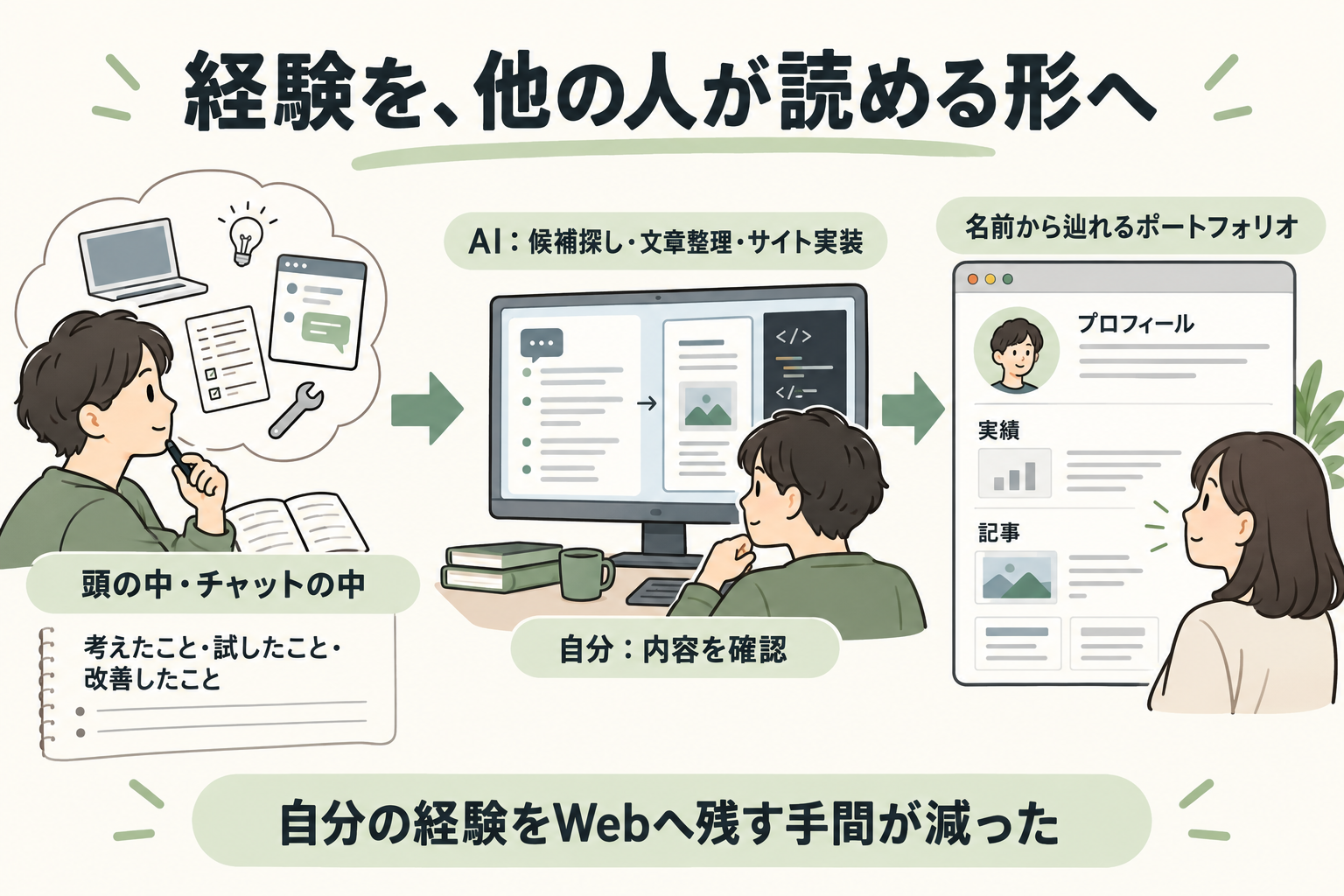
The most interesting part of this experience was not the search ranking; it was how much less effort it took to document my experience on the web. Before, I had to choose a topic, write the article, build the page, add images and links, and publish it all myself. I could do that once, but repeating it dozens of times adds up.
Now my everyday conversations with AI can become article material, and AI can help identify ideas, organize the writing, and implement the approved content on the site. It has become easier to turn experiences that existed only in my head or in chats into something others can read. I can focus on checking the content while still getting the article onto the site.
Portfolios are often thought of as collections of work by designers or engineers. But people working in marketing, process improvement, or AI can also explain their work by recording what they considered, tried, and improved. If someone searches my name during a job search, side project, contract discussion, or business meeting, specific articles alongside my profile and case studies can communicate what a résumé alone cannot.
When I started building the site in May, I did not expect it to appear first when someone searched my name just a few months later. I gradually added articles and work examples to preserve my experience; by September, a search for my name could lead people to that collection.I could bring experiences and ideas that had always been within me into a searchable form.That was the change I could see in these search results.